
Why 19th-Century Drug Formats Are Holding Back 21st-Century Medicine

The tablet is one of the most successful inventions in medical history.
It made medicine:
- Scalable
- Portable
- Standardised
It turned chemistry into something manufacturable.
Something distributable.
Something global.
And for over a century, it has worked.
But there’s a difference between something that works…
and something that is optimal.
The tablet solved the problems of the past.
It is now constraining the possibilities of the future.
1. A Format Born for Industry, Not Biology
The tablet was never designed for the human body.
It was designed for:
- Factories
- Supply chains
- Standardisation
A way to:
- Compress powder
- Fix a dose
- Ship it anywhere in the world
It is, at its core:
An industrial solution to a chemical problem
Not a biological one.
2. The Three-Step Failure
Every tablet must complete a sequence before it can work:
- Disintegrate
- Dissolve
- Be absorbed
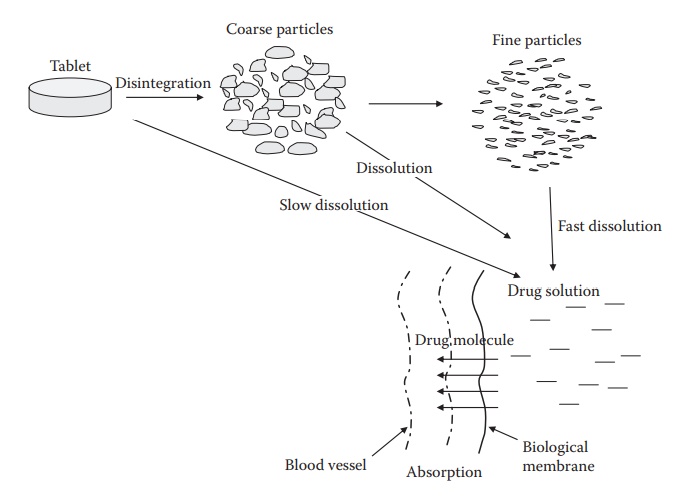
Each step introduces variability.
- Disintegration depends on formulation
- Dissolution depends on chemistry
- Absorption depends on the body
And the body is not consistent.
Which means:
Two people taking the same tablet
may receive fundamentally different outcomes
3. Dissolution Is a Bottleneck
The tablet assumes something critical:
That the drug will dissolve effectively in the body
But many modern drugs:
- Are poorly soluble
- Degrade in the stomach
- Have unpredictable absorption
So we compensate:
- Add excipients
- Increase dose
- Modify coatings
And the system becomes more complex.
Not more effective.
4. Fixed Dose in a Variable System
Tablets lock medicine into discrete units:
- 200 mg
- 500 mg
- 1 g
But biology doesn’t operate in fixed increments.
It is:
- Continuous
- Variable
- Personal
Yet we deliver treatment as if:
One size fits all
Because tablets require it.
5. The Swallowing Barrier

For millions, the problem is even more fundamental:
They cannot swallow tablets.
Conditions like Dysphagia affect:
- Elderly patients
- Neurological conditions
- Post-operative recovery
For them, the tablet is not inconvenient.
It is inaccessible.
6. The Illusion of Simplicity
Tablets appear simple.
Small. Solid. Familiar.
But inside, they are complex systems:
- Multiple excipients
- Engineered disintegration
- Controlled release mechanisms
All designed to make one thing happen:
A powder dissolving in a human body
It is a workaround—refined over decades.
But still a workaround.
7. Why the Tablet Still Dominates
If the limitations are clear, why hasn’t the system changed?
Because tablets optimise for:
Manufacturing
- Low cost
- High throughput
Regulation
- Known pathways
- Predictable outcomes
Infrastructure
- Global systems built around them
The tablet is not just a format.
It is an ecosystem.
And ecosystems resist change.
8. The Mismatch Is Growing
Modern medicine is evolving:
- More complex molecules
- Targeted therapies
- Personalised treatment
But the delivery system remains:
Fixed, solid, standardised
This creates tension.
The more advanced the drug becomes,
the less suited the tablet is to deliver it.
9. The Inevitable Shift
Every industry reaches a point where:
The legacy system becomes the constraint
For pharmaceuticals, that system is the tablet.
Not because it failed.
But because it succeeded—so completely—that it became invisible.
10. What Comes Next
The future of medicine will not be:
- Better tablets
- Smoother coatings
- Slightly faster dissolution
It will be a shift away from the assumption itself.
Toward systems that are:
- Absorption-first
- Patient-centred
- Precision-driven
Where:
- Dose is flexible
- Delivery is controlled
- Experience is designed
11. The End of the Default
The most powerful ideas are often the ones we stop questioning.
The tablet is one of them.
It feels inevitable.
But it isn’t.
It is simply:
The best solution we had—
for a different set of problems.
Final Line
The tablet is not the future of medicine.
It is the past, still in use.