
The Moment Medicine Started Bending Toward the Human Body

There is a quiet shift hidden inside the oval pill.
At first glance, it looks like a minor variation—just another shape in a sea of tablets.
But it represents something much deeper:
The moment medicine stopped being purely industrial—and started negotiating with the human body.
1. The Problem With the Circle
The round tablet dominates for one reason:
It works perfectly for machines.
But inside the human body, it’s not ideal.
A circular tablet:
- Has a wide contact surface
- Can sit flat against the throat
- Creates friction during swallowing
For many patients—especially those with Dysphagia—this becomes a real barrier.
It’s not just discomfort.
It’s hesitation. Avoidance. Non-compliance.
And in medicine:
If the patient doesn’t take the drug, the drug doesn’t work.
2. The Oval Is a Directional Shape
Oval tablets—often called caplets—introduce something the round tablet lacks:
Directionality.
Unlike a circle, an oval has:
- A long axis
- A short axis
This changes how it moves through the body.
When swallowed, the tablet naturally aligns with the oesophagus — a narrow, vertical passage.
This creates three critical advantages:
1. Reduced Contact Area
Less surface presses against the throat.
2. Lower Friction
A smoother path downward.
3. Psychological Ease
Patients perceive oval tablets as “smaller”—even when they’re not.
The oval pill doesn’t reduce size.
It reduces resistance.
3. The Illusion of Smallness
Here’s the subtle brilliance of the oval shape:
It manipulates perception.
A 12 mm round tablet feels large.
A 12 mm oval tablet feels manageable.
Why?
Because the brain doesn’t interpret size purely by volume.
It interprets shape and orientation.
- Narrow width → feels easier
- Tapered edges → feels smoother
- Elongation → feels more “passable”
This is not pharmacology.
This is human psychology embedded in design.
4. Coatings Complete the Illusion
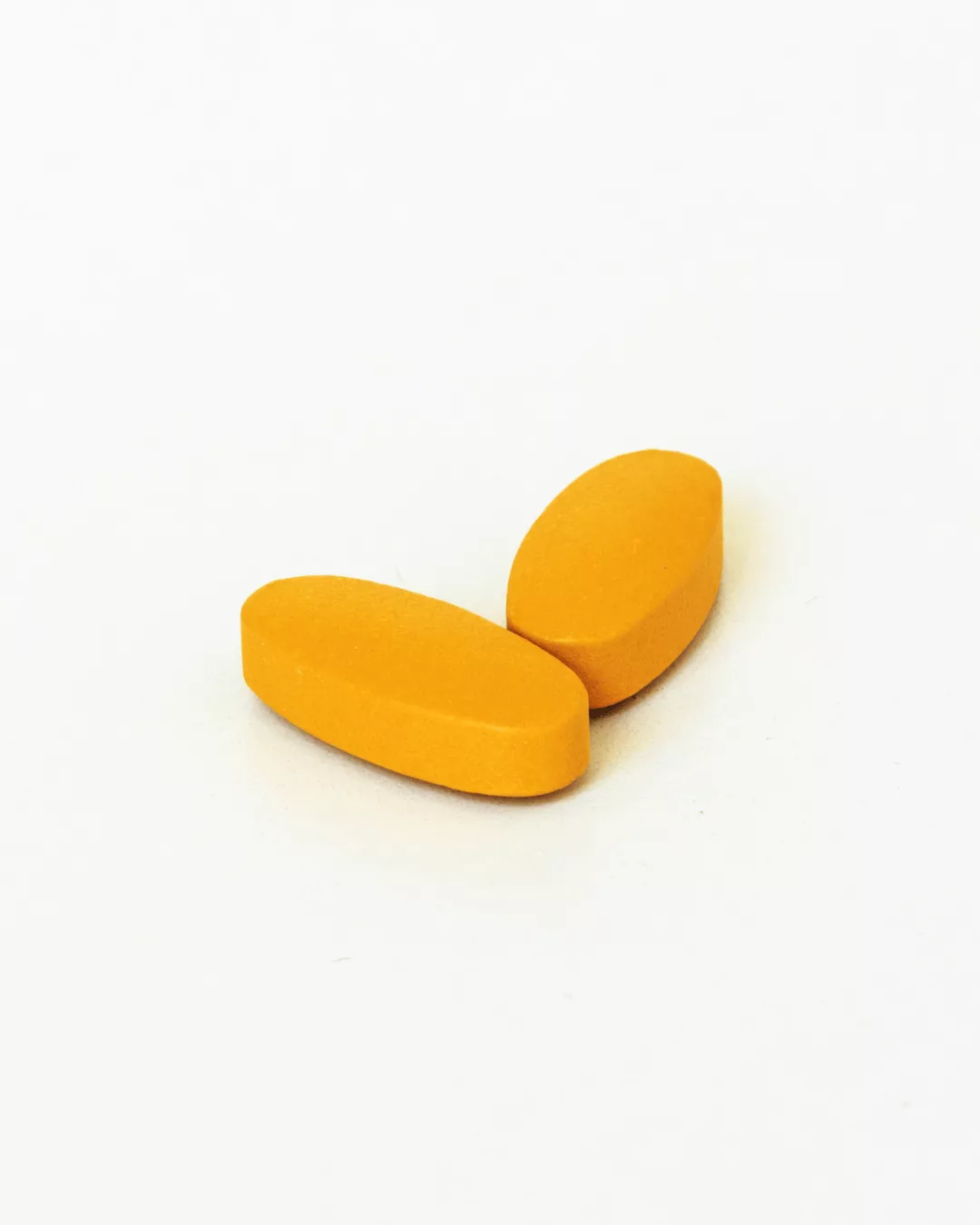
The oval shape rarely exists alone.
It is paired with film coating—a thin polymer layer that:
- Smooths the surface
- Reduces friction
- Masks taste
Together, shape + coating create:
A glide system
But there’s a trade-off:
- Coating adds thickness
- Thickness increases size
- Size can reintroduce difficulty
So even here, we see the pattern:
Every solution introduces a new constraint.
5. The Manufacturing Compromise
If oval tablets are better for humans, why aren’t all pills oval?
Because they are worse for machines.
Compared to circular tablets, oval shapes:
- Distribute compression forces unevenly
- Create stress at the ends
- Are more prone to chipping and capping
- Require more complex tooling
They are harder to:
- Manufacture at scale
- Maintain consistency
- Validate in production
So the industry faces a tension:
Human optimisation vs industrial reliability
And historically, industry wins.
6. Where Ovals Appear (And Why)
Oval tablets tend to emerge in specific situations:
High-Dose Drugs
Large tablets need to feel smaller → oval helps
Over-the-Counter Medicines
Consumer experience matters more → swallowability improves compliance
Competitive Markets
Brands differentiate via user experience
This is why many familiar pain relievers appear as oval caplets.
Not because it’s scientifically superior—
But because:
It feels better to take
7. The Deeper Truth: A System Under Pressure
The oval pill is not the final answer.
It is a signal.
A signal that the system is under strain.
- Round tablets optimise machines
- Patients struggle
- Industry adapts—slightly
The oval shape is one of those adaptations.
A compromise layered onto a legacy system.
8. The Limit of Shape
No matter how refined the geometry becomes:
- You are still swallowing a solid
- Dissolution is still required
- Absorption is still variable
Shape can improve:
- Experience
- Compliance
But it cannot solve:
- Bioavailability
- Dose rigidity
- Physiological variability
The oval pill improves the journey—
but not the destination.
9. The Ibumix Perspective
The existence of the oval tablet tells us something important:
The system knows it’s not perfect.
It is trying—incrementally—to adapt to humans.
But it is constrained by:
- Manufacturing infrastructure
- Regulatory frameworks
- Historical assumptions
So change happens at the surface:
- Shape
- Coating
- Texture
Not at the foundation.
10. A Different Future
If we step back and ask:
“What would medicine look like if it were designed for humans first?”
We wouldn’t start with:
- Compression
- Fixed shapes
- Swallowing as a requirement
We would start with:
- Absorption
- Precision
- Experience
And from there, the idea of an “oval pill” begins to feel like what it really is:
A transitional form.
Final Line
The oval pill is not the solution.
It is the system trying—quietly—to evolve.