
The Quiet Workaround at the Heart of Modern Medicine
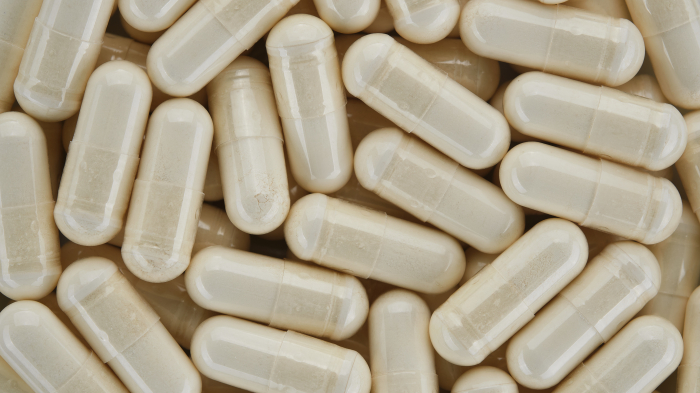
Capsules feel intentional.
Smoother than tablets.
More refined. More modern.
To many patients, they even feel better—easier to swallow, easier to trust.
But capsules were not created because they were superior.
They were created because, in many cases:
The tablet failed.
1. The Assumption: Everything Can Be a Tablet
The pharmaceutical industry is built around a default:
If a drug can be made into a tablet, it will be.
Tablets are:
- Cheap
- Stable
- Scalable
- Familiar
They are the industrial ideal.
But this assumption only holds if the drug cooperates.
And many don’t.
2. The Problem With Powder
A tablet begins as powder.
And powder is unpredictable.
To become a tablet, a drug must:
- Flow evenly into a die
- Compress under pressure
- Hold its structure after ejection
Some compounds simply refuse.
They may be:
- Too sticky
- Too fluffy
- Too brittle
- Too electrostatic
When compressed, they:
- Crack
- Laminate
- Fall apart
Or worse:
They never form a viable tablet at all.
3. Capsules: Bypassing the Problem
Capsules solve this by removing the hardest step:
Compression.
Instead of forcing powder into shape, capsules:
- Contain the drug
- Rather than reshape it
A capsule is simply:
- A shell
- Filled with powder, granules, or pellets
No intense pressure.
No structural compromise.
Capsules don’t fix the material.
They work around it.
4. Taste: The Hidden Barrier

Many drugs taste terrible.
Not unpleasant—unacceptable.
- Bitter
- Metallic
- Lingering
Tablets attempt to solve this with coatings.
But coatings:
- Add complexity
- Increase size
- Can fail if damaged
Capsules solve it cleanly:
- The drug is sealed
- Taste is bypassed entirely
You don’t experience the drug.
You swallow the container.
5. Speed and Release
Capsules also change how drugs behave in the body.
Compared to tablets, they can:
- Disintegrate faster
- Release contents more rapidly
- Avoid certain compression-related delays
Some capsules even contain:
- Pellets
- Multi-phase release systems
This allows:
- More controlled delivery
- Greater formulation flexibility
But again:
This isn’t superiority.
It’s adaptability.
6. The Trade-Offs Nobody Talks About
Capsules solve problems—but introduce new ones.
1. Moisture Sensitivity
Gelatin shells can:
- Absorb water
- Become brittle or soft
2. Stability Constraints
Certain drugs degrade faster inside capsules.
3. Bulk and Volume
Capsules are often:
- Larger than equivalent tablets
- Harder to miniaturise
4. Manufacturing Complexity
Filling capsules at scale requires:
- Different machinery
- Additional process steps
So capsules are not an upgrade.
They are a different compromise.
7. Standardisation Without the Human
Capsules come in fixed sizes:
000 → 00 → 0 → 1 → 2 → 3 → 4 → 5
These are based on:
- Volume capacity
- Machine compatibility
Not:
- Human anatomy
- Swallowing comfort
So even here, the pattern repeats:
The system standardises around production—not people.
8. When Capsules Become Necessary
Capsules appear when:
The Drug Won’t Compress
→ Tablets fail mechanically
The Taste Is Unmanageable
→ Coatings aren’t enough
The Formulation Is Complex
→ Multi-part systems required
Speed of Release Matters
→ Faster disintegration needed
In each case:
Capsules are not chosen.
They are required.
9. The Deeper Pattern
Step back, and a pattern emerges:
- Tablets = industrial default
- Capsules = exception handler
They sit inside the same system.
A system built around:
- Solid forms
- Fixed doses
- Manufacturing efficiency
Capsules don’t challenge that system.
They help it cope.
10. The Ibumix Perspective
Capsules reveal something critical:
The format of medicine is not fixed—it is negotiated.
When tablets fail, the industry adapts.
But only within the same paradigm:
- Solid dosage
- Swallowing required
- Dissolution-dependent
So innovation happens at the edges:
- Shape
- Shell
- Release profile
Not at the core.
11. A Different Question
If capsules exist because tablets fail…
Then the real question is not:
“Tablet or capsule?”
It is:
Why are we forcing drugs into solids at all?
Why:
- Compress powders?
- Encapsulate materials?
- Tie dose to physical form?
These are historical solutions to industrial problems.
Not biological ones.
Final Line
Capsules exist not because they are better—
but because the system needed a way to cope when tablets couldn’t.