
Why the Fate of Every Drug Is Decided After You Swallow It
Modern medicine celebrates discovery.
New molecules.
New targets.
New mechanisms.
Billions are invested in designing compounds that can interact with the human body in increasingly precise ways.
But there is a quieter, less glamorous reality:
Most drugs don’t fail because they don’t work.
They fail because they never truly arrive.
The real battlefield of medicine is not the receptor.
It is the journey.
1. The Moment Everyone Ignores
When a patient swallows a pill, it feels like the treatment has begun.
In reality, nothing meaningful has happened yet.
The drug is not in the bloodstream.
It is not at the target.
It is not active.
It is simply… in transit.
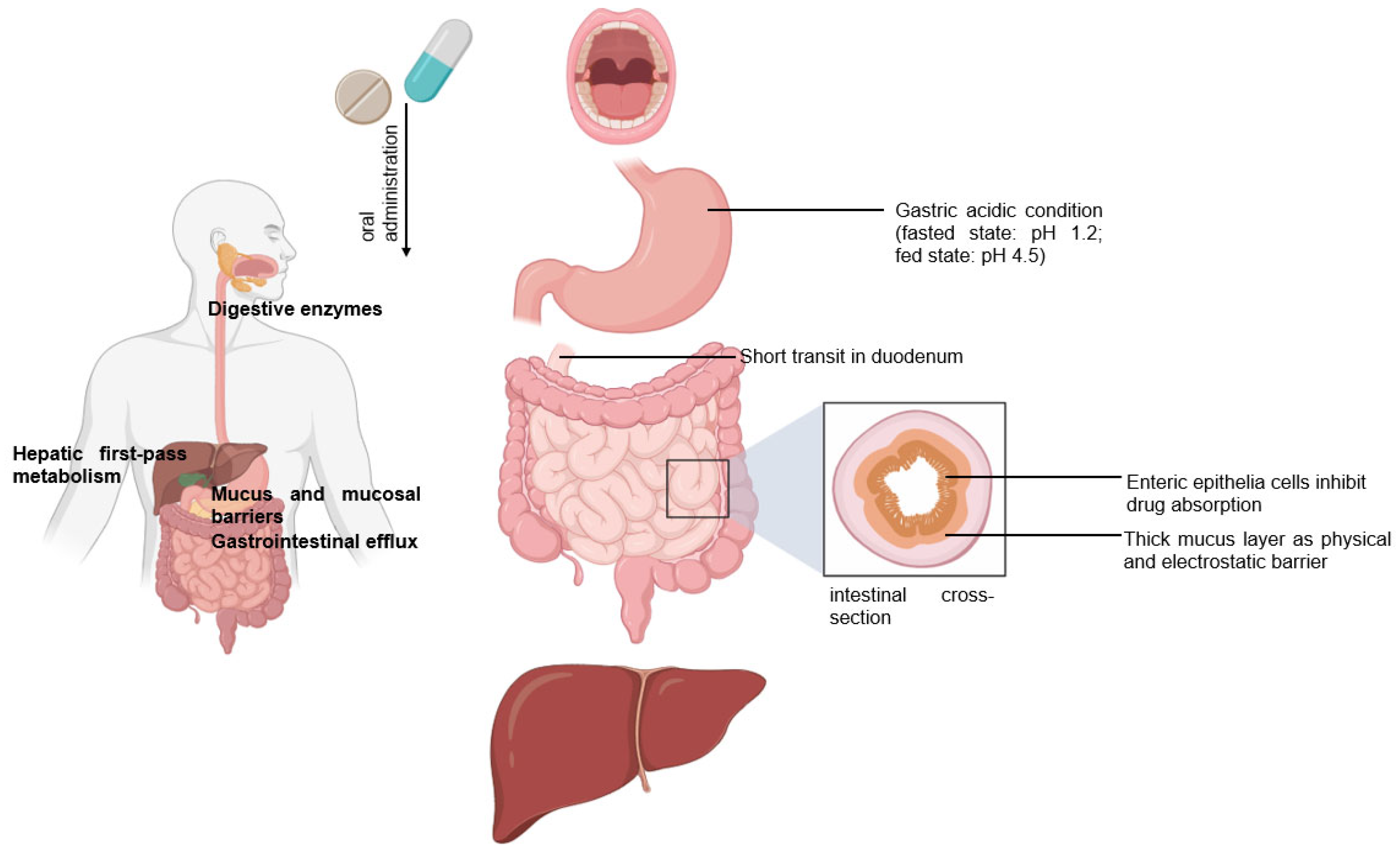
To become effective, it must:
- Disintegrate
- Dissolve
- Survive the stomach
- Cross the intestinal barrier
- Avoid premature metabolism
- Enter systemic circulation
Each step is a filter.
Each filter removes a portion of the dose.
By the time the drug reaches the bloodstream,
it is often only a fraction of what was swallowed.
2. The Intestinal Barrier: Where Most Drugs Are Lost
The small intestine is often described as the primary site of drug absorption.
But it is not a passive surface.
It is a defensive system.
Designed to:
- Select nutrients
- Block toxins
- Regulate entry
For a drug, this environment is hostile.
Barriers include:
Physical Barriers
- Mucus layers
- Tight junctions between cells
Biological Barriers
- Enzymes that degrade compounds
- Efflux transporters that pump drugs back out
Chemical Barriers
- Variable pH environments
- Interaction with food and bile
So absorption is not guaranteed.
It is negotiated.
The body is not trying to absorb your drug.
It is trying to protect itself from it.
3. Dissolution: The Silent Gatekeeper
Before a drug can cross a membrane, it must dissolve.
This is a simple principle with profound consequences:
Undissolved drugs cannot be absorbed.
And yet:
- Many modern drugs are poorly soluble
- Lipophilic compounds resist aqueous environments
- Formulations rely on imperfect dissolution processes
So even before the intestinal barrier:
A significant portion of the dose may never become available
It passes through the body—unused.
4. Variability: The Hidden Instability
Even when absorption occurs, it is not consistent.
It varies between:
- Patients
- Days
- Conditions
Factors include:
- Food intake
- Gastrointestinal motility
- Microbiome composition
- Enzyme expression
Two patients taking the same drug, at the same dose, can experience:
- Different peak concentrations
- Different onset times
- Different therapeutic outcomes
The system delivers a fixed dose.
The body delivers a variable result.
5. First-Pass Metabolism: The Hidden Reduction
Even after a drug crosses the intestinal barrier, it is not safe.
It enters the liver.
Where a significant portion may be:
- Metabolised
- Inactivated
- Cleared
This is known as first-pass metabolism.
And it can be dramatic.
Some drugs lose:
- 50%
- 70%
- Even 90%
Before reaching systemic circulation.
The dose on the label is not the dose in the body.
6. The Industry’s Blind Spot
Pharmaceutical innovation has historically focused on:
- Target identification
- Molecular optimisation
- Binding affinity
But these efforts assume something critical:
That the drug will reach its target
Which is often the least controlled part of the system.
So we see a pattern:
- Brilliant molecules
- Poor delivery
- Inconsistent outcomes
The failure is not always chemical.
It is logistical.
7. The Cost of Ignoring Absorption
When absorption is inefficient or variable, the system compensates:
- Higher doses
- More frequent dosing
- Complex formulations
This leads to:
- Increased side effects
- Greater variability
- Reduced patient compliance
And ultimately:
Lower therapeutic performance than the molecule could achieve
8. Reframing the Problem
The industry asks:
“Does this drug work?”
But the more important question is:
“Can this drug reliably reach where it needs to go?”
Because without that:
- Efficacy is theoretical
- Precision is illusory
- Outcomes are inconsistent
9. The Ibumix Perspective
Absorption is not a secondary consideration.
It is the primary determinant of success.
The future of medicine will not be defined by:
- Better targets
- Stronger binding
- More potent molecules
It will be defined by:
Control over delivery
Control over:
- Dissolution
- Transport
- Exposure
Turning variability into predictability.
10. A Different Model of Medicine
Imagine a system where:
- The dose delivered equals the dose absorbed
- Variability is minimised
- Bioavailability is engineered, not assumed
Where:
- The journey is controlled
- Not left to chance
In that system:
Absorption is no longer a battlefield.
It is a solved problem.
Final Line
The drug is only the beginning.
What matters is whether it arrives.
And in modern medicine, that is still the hardest part.
Part of the Ibumix series on bioavailability. Start with the overview: Bioavailability: the medicine that never arrives.