
The Illusion of Precision in a World of Fixed Doses
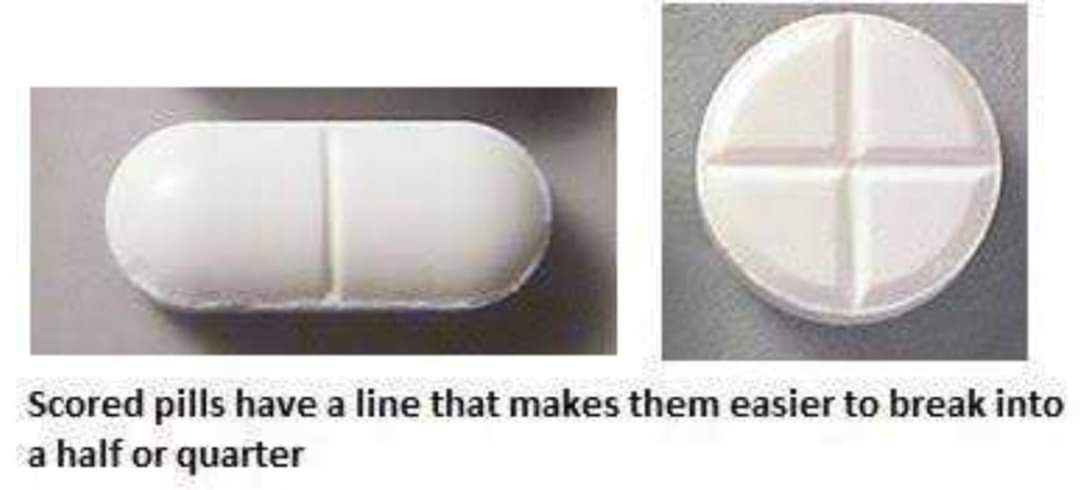
Look closely at a tablet.
There’s often a line running through its centre.
Clean. Intentional. Reassuring.
It suggests something simple:
You can split this.
Half the tablet. Half the dose.
Control, built into the design.
But that line—precise as it looks—hides a deeper truth:
It is not precision. It is a compromise.
1. The Promise of Control
Score lines exist to solve a problem:
Not every patient needs the same dose.
So instead of manufacturing multiple strengths, the system offers a shortcut:
- Break the tablet
- Adjust the dose
- Maintain flexibility
It feels elegant.
Efficient.
Empowering.
But this only works if one assumption holds:
That each half of the tablet contains exactly half the drug.
And that assumption is… fragile.
2. The Reality of Distribution
Inside a tablet, the drug is mixed with excipients:
- Fillers
- Binders
- Disintegrants
This mixture is blended—but not perfectly.
At microscopic levels:
- Particles can cluster
- Density can vary
- Distribution is not perfectly uniform
So when you split a tablet:
- One half may contain slightly more API
- The other slightly less
In many cases, the difference is small.
In some cases, it matters.
The tablet looks uniform.
The chemistry inside it is not perfectly so.
3. Breaking Is Not a Clean Act
Even if distribution were perfect, the act of splitting introduces error.
Tablets don’t divide like engineered components.
They fracture.
Which means:
- Edges crumble
- Powder is lost
- Halves are uneven
Even with a pill cutter:
- Alignment varies
- Force varies
- Outcome varies
So the “half dose” becomes an approximation.
Not measured. Not calibrated. Just… divided.
4. When Splitting Becomes Dangerous
For some tablets, splitting is not just imprecise.
It is unsafe.
Particularly with:
- Modified-release formulations
- Enteric-coated tablets
- Multi-layer systems
These designs rely on:
- Structural integrity
- Controlled breakdown
Breaking them can:
- Destroy release profiles
- Dump drug rapidly
- Reduce effectiveness—or increase risk
And yet, visually, they may still look “splittable.”
The score line signals permission.
The formulation may not agree.
5. Why Score Lines Exist at All
If score lines are imperfect, why use them?
Because they solve system-level problems:
1. Manufacturing Simplicity
Fewer strengths → fewer production lines
2. Inventory Efficiency
One product → multiple dosing possibilities
3. Regulatory Convenience
Less complexity in approval pathways
In other words:
Score lines reduce complexity—for the system
Even if they introduce variability—for the patient
6. The Psychology of the Line
The score line does more than guide a break.
It creates trust.
It tells the patient:
- This is designed
- This is controlled
- This is safe
Even when the underlying reality is less precise.
This is powerful.
Because in medicine:
Perceived control often feels like real control
7. A Workaround, Not a Solution
Score lines are not a sign of advanced design.
They are a workaround.
A way to introduce flexibility into a system that is fundamentally rigid:
- Fixed-dose tablets
- Standardised manufacturing
- Limited personalisation
Instead of designing:
- Variable dosing systems
We:
- Break solid objects in half
8. The Deeper Problem: Fixed Units
The need for score lines exposes a deeper issue:
Medicine is delivered in fixed physical units
But patients are not fixed:
- Different metabolisms
- Different sensitivities
- Different needs
So we adapt the unit:
- Split it
- Adjust it
- Approximate with it
Rather than redesigning the system itself.
9. The Ibumix Perspective
The score line reveals something fundamental:
The system knows it lacks flexibility
But instead of rethinking the format, it modifies the surface.
Adds a line.
Signals adaptability.
Without truly delivering precision.
10. A Different Future
Imagine a system where:
- Dose is not tied to a solid object
- Adjustment is precise, not physical
- Personalisation is built-in, not improvised
In that world:
- There is no need to split
- No need to approximate
- No need for a line
Because the system itself is flexible.
Final Line
The score line looks like precision—
but it exists because true precision is missing.